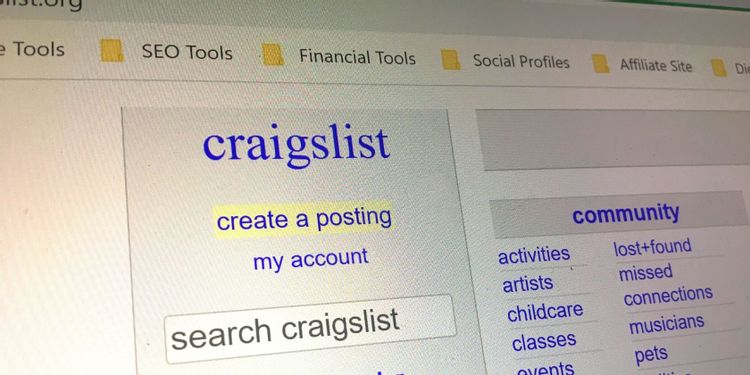
All Craigslist's jobs nationwide with simple click
enter your words below to search and choose a type of job
ADVICE #1 : Make sure that the keywords terms you are considering are highly relevant to your ultimate goal.
The Craigslist website is number 1 for classified ads, the problem being that the interface does not allow you to search nationwide jobs quickly. Also, we are here to help you find what you are looking for, easily and quickly using keywords.
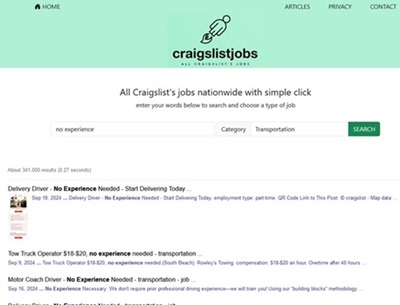
Using it is very simple, you just have to “type” the words describing the job you are looking for directly in the search bar. If, for example, type "no experience", select "transportation" category and validate by clicking on the SEARCH button.
Craigslist splits its job postings into 30 official categories, from transportation and skilled trades to healthcare, software, and government work. Each category groups together similar listings, but Craigslist itself only lets you browse one city at a time, which means checking the same category across dozens of local sites to get a real nationwide picture. craigslistjobs.net combines a free-text keyword search with any of these 30 categories so you can scan matching listings from across the country on a single page, instead of repeating the same search city by city.
This approach works best for two kinds of searches. The first is casting a wide net early in a job search, when you want to see what is being posted nationwide for a given role or category before narrowing down to specific cities. The second is tracking a niche role that few employers post at once, such as a CDL driver, a dental hygienist, or a CNC machinist, where relevant listings tend to be scattered across many smaller cities rather than concentrated in one or two large markets. In both cases, combining a keyword with the right category narrows the results far more than searching Craigslist's general listings.
Tips for research
1) To find a specific kind of job, like an "no experience" on transportation category, you just need to enter these words in the search bar, like this - "no experience" and choose category.
2) To add words to a search, simply enter them afterwards.
3) If you want to exclude words from a search, you must use the minus sign, for example: -experience. The search will then focus on all except experience. You can also use multiple minus signs in your searches.
Last Article
Create your cover letter
Writing an effective cover letter is essential to making a good impression on recruiters or training managers. Here are some tips for writing a powerful cover letter:
1. Clear and professional structure
A cover letter must be well structured. It generally consists of four parts:
Header: Include your contact details at the top left (name, address, telephone, email) and those of the recruiter or company on the right.
Introduction: Briefly introduce yourself, mention the position or training you are applying for and explain how you learned about the opportunity.
Development: Explain your skills, experience and qualities related to the position or training. Demonstrate that you understand the company's expectations and how you can meet them.
Conclusion: End by reaffirming your motivation, specifying that you are available for an interview, and formulate a polite sentence.
2. Personalize the letter
Adapt your letter to each position or training you are applying for. Don’t settle for a form letter! Show that you’ve taken the time to understand the company, its culture, and its needs. This shows that you’re genuinely interested and that you’re not sending the same letter to everyone.
Research the company: Learn about the company’s history, projects, values, and products/services. This will help you connect the dots between what they’re looking for and what you can bring to the table.
Specify the why: Explain why you’re attracted to this particular company. Is it their mission, their projects, or their reputation that motivates you?
3....
Article
Create your goals
Setting clear goals for your job search can help you stay focused and motivated. Here’s a list of potential goals you can consider:
1. Identify Career Path
Goal: Research and choose a specific industry or role to target by [specific date].
Action Steps: Explore job descriptions, talk to professionals in the field, and identify what excites you.
2. Enhance Skills
Goal: Complete [number] online courses or certifications relevant to your desired field by [specific date].
Action Steps: Enroll in courses on platforms like Coursera, Udemy, or LinkedIn Learning.
3. Update Application Materials
Goal: Revise and tailor your resume and cover letter for each application by [specific date].
Action Steps: Create a base template and modify it for each job you apply for.
4.....
Article
Your conversion
Winning a job during a professional conversion can be challenging but rewarding! Here’s a strategy you can follow:
1. Identify Transferable Skills
Assess Your Current Skills: Make a list of skills from your previous experience that can apply to your new field.
Research the New Field: Understand what skills are in demand and align your experience with those.
2. Update Your Resume and LinkedIn
Tailor Your Resume: Highlight relevant skills and experiences that apply to the new role. Use keywords from job descriptions.
Craft a Compelling Summary: Write a professional summary that emphasizes your desire for change and your transferable skills.
3. Networking
Connect with Professionals: Reach out to people in your desired field. Use LinkedIn to find connections or attend industry events.
Informational Interviews: Request brief meetings to learn more about their experiences and gather advice.
4...
Article
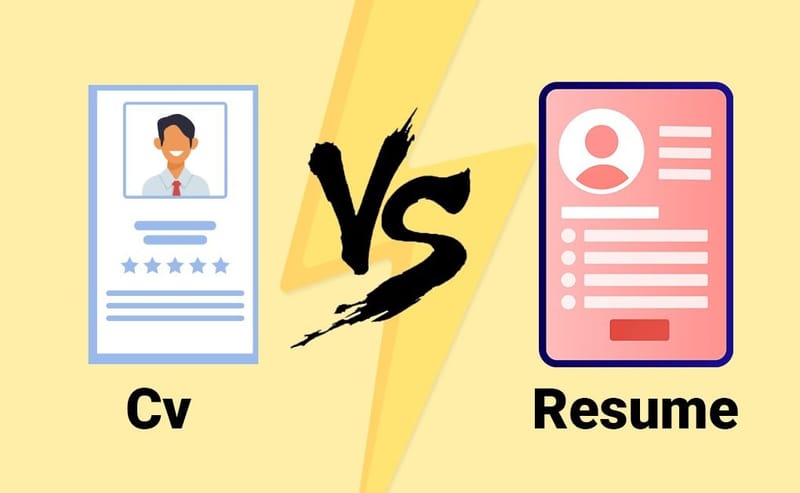
resume or cv
The terms "resume" and "CV" (curriculum vitae) are often used interchangeably, but they refer to different documents and are used in different contexts. Here’s a breakdown to help you decide which one to use:
Resume
Length: Typically 1-2 pages.
Purpose: A concise summary of your skills, experience, and education tailored for a specific job application.
Content: Focuses on relevant work experience, key skills, and accomplishments. Less detail about education and other background information.
Use: Commonly used in the U.S. and Canada for job applications across various industries.
CV (Curriculum Vitae)
Length: Usually 2+ pages, sometimes much longer depending on the field and experience.
Purpose: A comprehensive document detailing your entire career, including education, work experience, publications, presentations, and other achievements.
Content: Includes sections like education, research experience, teaching experience, publications, and professional affiliations.
Use: Commonly used in academic, research, and medical fields, and often required for positions outside of the U.S. (especially in Europe).
When to Use...
Article
Make your CV
Creating a strong CV is key to landing your desired job. Here’s a step-by-step guide to help you craft an effective one:
1. Choose the Right Format
Reverse Chronological: Most common; lists your most recent experience first.
Functional: Focuses on skills rather than work history; useful for career changers.
Combination: Blends both chronological and functional formats.
2. Contact Information
Include your full name, phone number, email address, and LinkedIn profile (if applicable).
You can also add your city and state, but there’s no need for a full address.
3.....
A few ten minutes are enough for the new jobs to be available throughout the country. Don't miss a thing with 1 click.